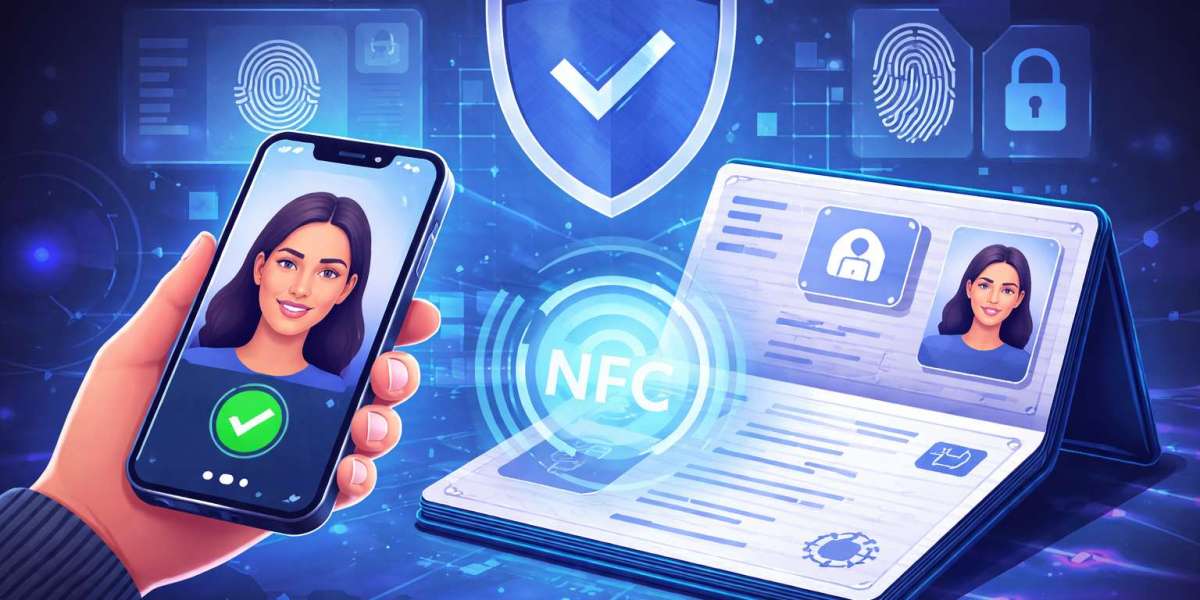
NFC verification and certified liveness detection are transforming the way businesses handle digital identity verification in today’s fast-paced, security-driven environment. As online transactions, remote onboarding, and digital services continue to expand, ensuring that users are genuine and documents are authentic has become a top priority. These advanced technologies provide a seamless yet highly secure solution to prevent identity fraud and improve user trust.
NFC (Near Field Communication) verification enables secure data extraction directly from embedded chips in official identity documents such as passports, national ID cards, and residence permits. This chip-based verification ensures that the information being captured is original and tamper-proof, as it comes directly from the document itself rather than relying on manual input or visual checks. By simply tapping an NFC-enabled smartphone against the document, users can instantly share encrypted personal data, making the process both quick and reliable.
One of the major advantages of NFC verification is its ability to eliminate document forgery risks. Traditional identity verification methods often rely on image-based validation, which can be manipulated using advanced editing tools. NFC technology bypasses this vulnerability by accessing secure, government-issued data stored within the chip. This makes it highly effective for industries such as banking, fintech, travel, and telecom, where compliance and accuracy are critical.
Complementing NFC verification is certified liveness detection, a technology designed to ensure that the person presenting the identity document is physically present during the verification process. Liveness detection uses advanced AI algorithms to analyze facial movements, expressions, and depth perception in real-time. It can distinguish between a live person and spoofing attempts such as photos, videos, or masks, adding an essential layer of security to digital onboarding.
Certified liveness detection goes a step further by adhering to globally recognized standards and certifications. This ensures that the technology meets strict security benchmarks and regulatory requirements. It provides businesses with confidence that their verification processes are not only effective but also compliant with international guidelines. For users, it offers a frictionless experience, as most liveness checks are completed within seconds without requiring complex actions.
When combined, NFC verification and certified liveness detection create a powerful identity verification ecosystem. NFC ensures that the document is authentic, while liveness detection confirms that the user is real and present. This dual-layer approach significantly reduces the chances of identity fraud, account takeovers, and unauthorized access.
Businesses adopting these technologies benefit from faster onboarding, reduced operational costs, and improved customer satisfaction. Users no longer need to visit physical locations or go through lengthy verification processes. Instead, they can complete secure identity checks from the comfort of their homes using their smartphones.
In an era where digital trust is crucial, integrating NFC verification and certified liveness detection is no longer optional but essential. These technologies not only enhance security but also streamline user experiences, making them a vital component of modern identity verification systems. As cyber threats continue to evolve, organizations that invest in robust verification solutions will be better positioned to build trust, ensure compliance, and stay ahead in the competitive digital landscape.